Introducing Gradient Pastel: A Calming Creative Typeface
When you are building a visual identity, the typography you choose speaks volumes before the audience even reads the content. In a digital landscape often saturated with aggressive, high-contrast visuals, there is a growing demand for design assets that offer reprieve and relaxation. This is where the Gradient Pastel Color Alphabet enters the conversation. It is not merely a set of characters; it is a specific visual tool designed to evoke tranquility, warmth, and a distinctively modern aesthetic. As a premium font, it offers a specialized solution for creators who need their work to feel inviting rather than demanding.
The Visual Language of Soft Color
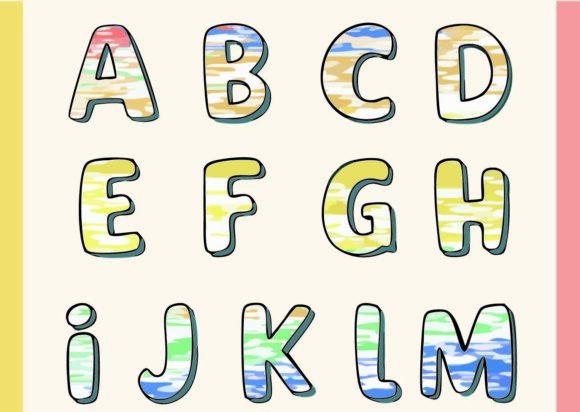
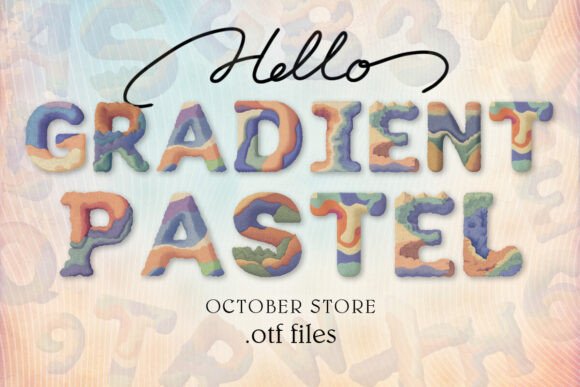
Gradient Pastel is a creative font that steps away from the rigidity of standard monochromatic typefaces. It presents an alluring blend of 36 unique characters—comprising 26 artistically crafted letters and 10 numbers—each brushed with a soft, shifting color palette. The defining characteristic here is the gradient effect within the letterforms themselves. Unlike a standard typeface where you apply a flat color in your design software, this display font arrives with the color theory baked in. The hues transition gently from one soft tone to another, creating a seamless, watercolor-like quality.
The personality of this typeface is undeniably cozy and charming. It avoids the sharp edges of geometric sans serif font styles and the stuffiness of traditional serif font structures. Instead, it sits in a unique category—stylistically similar to a handwritten font in its warmth, yet structured enough to maintain legibility. This makes it an outstanding choice for projects where the goal is to convey a sense of comfort and approachability. If you are designing for a wellness brand, a lifestyle blog, or a boutique product, this font masterfully combines style with subtlety, ensuring your message lands with a lighthearted elegance.
Strategic Applications for Modern Creators
Understanding where to deploy a specialized typeface like Gradient Pastel is key to effective brand identity. Because this is an OpenType-SVG color font, it shines brightest in environments where high-resolution color rendering is supported. For logo design, particularly for startups in the beauty, fashion, or artisanal food sectors, this font offers an immediate "soft launch" aesthetic. It tells the customer that the brand is modern, approachable, and detail-oriented.
In the realm of social media graphics, attention spans are short, and visual clutter is high. Gradient Pastel cuts through the noise not by being loud, but by being visually distinct. It is perfect for Instagram stories, Pinterest pins, or TikTok overlays where you want to highlight a specific phrase or call-to-action. The pastel gradients naturally draw the eye without causing visual fatigue, which can significantly improve audience engagement and retention rates.
Furthermore, consider the impact on packaging design and editorial design. For a magazine headline or a product label, the font acts as both a typographic element and a decorative graphic. It reduces the need for additional ornamental design elements, simplifying your layout while maximizing visual impact. Whether you are a small business owner designing your own marketing collateral or a professional designer curating design assets for a client, this font serves as a bridge between text and art.
Technical Realities and Workflow Integration
While the aesthetic appeal is the primary draw, practical application requires understanding the technical specifications. As noted, Gradient Pastel is an OpenType-SVG font. This technology allows for the inclusion of color and gradient data directly within the font file. However, this also dictates compatibility.
This font is fully compatible with PhotoShop, Illustrator, Silhouette, and Inkscape. These applications support the complex rendering required to display the gradient colors correctly. If you are a crafter using a Silhouette machine to create decals or heat transfers, this font integrates beautifully into that workflow. However, it is important to note the limitations: the OTF and/or TTF files are not compatible with Cricut machines. Cricut Design Space currently has limitations rendering color fonts, often defaulting them to a solid black. Therefore, if your primary output is Cricut-based cutting, you may need to rasterize the text first or choose a different asset.
For digital applications, such as web design, implementation requires careful handling. While modern browsers support color fonts, file sizes can be larger than standard vector fonts. Therefore, it is best used for headlines or hero text rather than long-form body copy. Speaking of body copy, Gradient Pastel is a display font by nature. Its artistic rendering makes it ideal for large sizes, but for smaller text, readability may suffer. A best practice in modern typography is to pair this font with a clean, neutral sans serif font for paragraphs, ensuring your content remains accessible while maintaining the stylistic flair of the pastel headers.
Evaluating Fit and Font Pairing
When integrating Gradient Pastel into your toolkit, treat it as a specialist rather than a generalist. It is not designed to replace your standard workhorse fonts like Helvetica or Georgia. Instead, it acts as an accent. To evaluate if it fits your project, ask yourself: Does the brand voice lean toward nurturing, playful, or boutique? If the answer is yes, this is a strong candidate.
Effective font pairing is essential here. Because Gradient Pastel is visually heavy due to its color and texture, it requires a counterpart that is quiet and structured. A thin, geometric sans serif works well to ground the floating nature of the pastel letters. Avoid pairing it with other expressive fonts like a chaotic script font or a decorative handwritten font, as this will create visual competition and confuse the viewer's hierarchy.
Finally, always consider the commercial licensing. If you are using this for a client project or selling merchandise featuring the font, ensure your usage aligns with the license terms provided. By respecting these boundaries and utilizing the font within its intended software ecosystem, you can elevate your creative projects, bringing a touch of enchanting, pastel perfection to your visual communications.