Chocolate Day: A Sweet Treat for Your Design Projects
More Than Just a Font: Understanding Chocolate Day's Personality
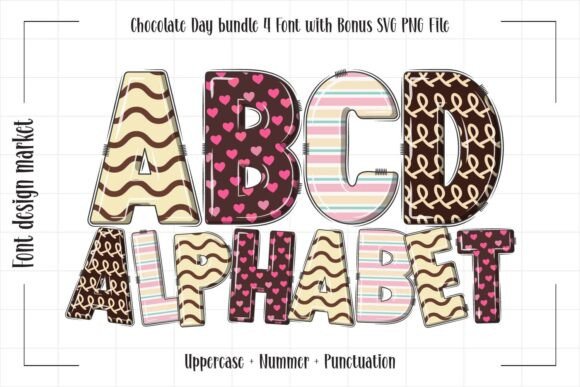
When you first encounter the Chocolate Day typeface, it's less like viewing a standard font and more like uncovering a delightful, edible secret. This isn't a sterile set of characters; it's a premium font where every letter is a tiny, meticulously crafted cookie. The visual character is unmistakable: each glyph features the gentle, irregular shape of a baked good, complete with realistic chocolate chip indentations and whimsical icing details that vary from letter to letter. The overall personality is one of warmth, nostalgia, and playful indulgence. It evokes the feeling of a cozy kitchen, a cherished family recipe, and the simple joy of a homemade treat.
As a display font, Chocolate Day isn't designed for long paragraphs of body copy. Its strength lies in its immediate, emotional impact. The style sits at a fascinating intersection—it has the decorative flair of a script font or handwritten font, yet its forms are built on a more structured, recognizable base, ensuring legibility at headline sizes. This makes it a uniquely versatile creative font. It carries the charm of handcraft without sacrificing the clarity needed for a strong headline or a logo. Its appeal is broad, resonating with anyone who appreciates design that doesn't take itself too seriously but still values quality and detail.
Where Chocolate Day Truly Shines: Real-World Applications
The true test of any typeface is how it performs in the wild. Chocolate Day excels in projects where the goal is to create an immediate, friendly, and memorable connection with the audience. Its nature makes it a standout choice for specific niches.
In packaging design, it's a natural fit. Imagine it on the wrapper of a gourmet chocolate bar, the label for a small-batch cookie mix, or the branding for a local bakery. The font does half the marketing work, instantly communicating the product's artisanal quality and sweet promise. For editorial design, think beyond the standard serif or sans serif font. Chocolate Day is perfect for the chapter titles in a whimsical cookbook, the cover of a children's storybook about baking, or the headlines in a lifestyle magazine's food section. It sets a tone that is inviting and digestible.
The digital space is another playground. Social media graphics for bakeries, dessert influencers, or even family-oriented brands gain an instant boost in personality. A headline using Chocolate Day in a promotional post for a bake sale or a new menu item will stop the scroll. For web design, it should be used sparingly—perhaps for a hero section headline on a confectionery's website or a special announcement banner—where its charm can be appreciated without compromising site-wide readability. Entrepreneurs and small business owners will find it invaluable for creating a cohesive brand identity that feels personal and approachable from the first glance.
Making It Work: Practical Guidance for Designers and Creators
Choosing a font like Chocolate Day is only the first step. Using it effectively requires a bit of strategy. Here’s how to integrate this commercial font into your workflow for the best results.
First, evaluate the project fit. Is the project's tone playful, nostalgic, rustic, or indulgent? If yes, Chocolate Day is a strong contender. If the project demands sleek minimalism, corporate formality, or ultra-modern aesthetics, this font will feel out of place. Its charm is specific, and that's its power. Don't force it into a context where its personality will clash.
Next, master the art of font pairing. A decorative display font like Chocolate Day needs a reliable partner. It pairs beautifully with clean, neutral typefaces that won't compete for attention. A simple sans serif font like Montserrat or Lato for body text provides a modern, clean counterbalance. Alternatively, a classic serif font like Georgia or a simple script font with a more subdued flow can create a lovely, layered hierarchy. The key is to let Chocolate Day own the headlines and large, impactful text, while its partner handles the supporting information.
Before finalizing, review the included styles and test readability. Many premium fonts include alternates, ligatures, or stylistic sets. Explore these to add variety and avoid repetition in your letterforms. Always test the font at the size it will be used. A headline that looks perfect in your design software might lose some icing detail when shrunk for a mobile screen. Ensure the chocolate chips and icing swirls remain distinct and contribute to the effect rather than creating visual noise.
Finally, mind the licensing. As a commercial font, Chocolate Day comes with specific terms. Verify that the license covers your intended use—whether it's for a client's logo, merchandise for sale, or a digital product. Respecting the licensing agreement is not just legal compliance; it's a professional practice that supports the type designers who create these valuable design assets.
A Final Thought on Creative Fonts
In a sea of predictable typography, a font like Chocolate Day is a reminder that design can be joyful. It’s a tool for storytellers, brand builders, and creators who understand that the right visual language can evoke a feeling as powerfully as the words themselves. Use it to sprinkle a little sweetness into your next project and watch how it transforms the ordinary into something delightfully memorable.