Joyful Ghost: A Playful Font for Creative Projects
Understanding the Personality of Joyful Ghost
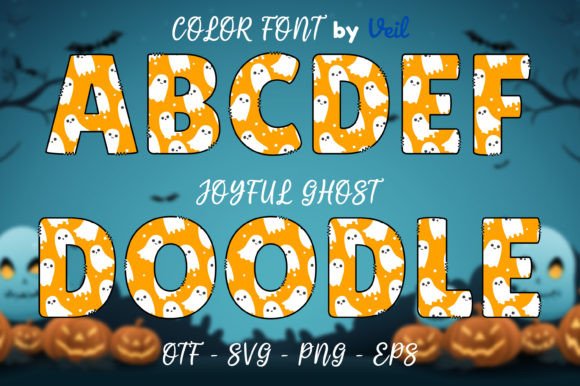
When you first encounter the Joyful Ghost typeface, the name alone gives you a pretty good clue about its vibe. It’s not trying to be serious, corporate, or austere. Instead, this creative font leans heavily into a whimsical, slightly spooky, but ultimately friendly aesthetic. Visually, it usually features rounded edges and irregular baselines, mimicking the organic flow of hand-drawn lettering. It feels like something you’d see on a Halloween party invitation that focuses more on fun than fear, or perhaps on the cover of a quirky indie game.
The personality of Joyful Ghost is defined by its movement. Unlike rigid geometric sans-serifs, this display font has a bounce to it. The characters might vary slightly in size and angle, creating a rhythm that feels alive. This makes it an excellent choice for projects where you want to inject immediate personality and warmth. It communicates that a brand or project doesn't take itself too seriously and is approachable, imaginative, and perhaps a little bit cheeky. If you are building a brand identity for a toy store, a bakery with a monster theme, or a children’s entertainment app, this font speaks that specific language fluently.
Where This Font Shines: Real-World Applications
Choosing the right typeface is about matching the tool to the task. Joyful Ghost isn't a workhorse body text font; you wouldn't use it for a lengthy legal contract or a dense academic paper. Its strength lies in headlines, logos, and short bursts of text where impact is key. In packaging design, for example, it can make a product jump off the shelf. Imagine a box of cereal or a bag of artisanal coffee where the product name needs to convey fun and energy—Joyful Ghost handles that with ease.
Here are a few specific areas where this font proves its worth:
- Children’s Publishing: As mentioned, editorial design for kids relies on engagement. This font is perfect for book covers and chapter headings in middle-grade novels or picture books. It offers that whimsical feel that draws young readers in.
- Event Stationery: From birthday party invitations to Halloween flyers, the font adds an instant thematic layer. It’s particularly effective for greeting cards where you want the typography to act as part of the illustration.
- Merchandise and Apparel: T-shirts, tote bags, and stickers often rely on handwritten fonts or expressive type to make a statement. The quirky nature of this font translates well to print-on-demand products.
- Digital Media: For social media graphics, especially on platforms like Instagram or TikTok, a bold display font can stop the scroll. Use it for thumbnails or overlay text on video content to maintain a playful brand voice.
Design Strategy: Pairing and Readability
One of the biggest mistakes creatives make with expressive fonts is using them for everything. To make Joyful Ghost work effectively, you need to practice restraint and smart font pairing. Because it is a premium font with high visual interest, it can become overwhelming if overused. The golden rule for typography hierarchy is to pair a "loud" font with a "quiet" one.
Since Joyful Ghost acts as the voice of the design, you need a partner that acts as the narrator. A clean, neutral sans serif font is usually the best companion here. Think of fonts like Open Sans, Roboto, or Lato for your body text. These fonts are designed for screen readability and won't compete for attention. If you are going for a more vintage or classic look, a simple serif font with low contrast can also work, but ensure it doesn't have too many decorative serifs that might clash with the ghost's irregularity.
Visual hierarchy is crucial. Use Joyful Ghost for your main headline (H1), subheadings, or call-to-action buttons. Switch to your standard sans-serif for paragraph text, navigation menus, and fine print. This contrast not only looks professional but also guides the viewer's eye exactly where you want it to go. It ensures that your design feels organized rather than chaotic.
Technical Considerations and Licensing
Before you integrate any new asset into your workflow, practical evaluation is necessary. First, consider the context of web design. While Joyful Ghost looks fantastic in static mockups, you need to test how it renders on different screen sizes. A font with a lot of character can sometimes lose legibility on small mobile screens. Always test the font at the actual size it will appear on a phone. If the letterforms merge or become muddy, it might be best reserved for desktop headers only.
Another aspect to review is the availability of styles. Does the typeface come with bold or italic variations? Many handwritten fonts don't have traditional bolds because the hand-drawn style doesn't naturally support it without redrawing the glyphs. Check if the font family offers enough versatility for your needs. If you need to emphasize a word within a headline, you might have to change the color or size rather than applying a "bold" style, which could distort the font's natural look.
Finally, let's talk about the boring but essential stuff: licensing. If you are a small business owner or a freelancer, you must ensure you have the correct license for your usage. There is a difference between a desktop license (for logos, print) and a web license (for @font-face usage on websites). Most commercial fonts require separate purchases for different mediums. Always read the End User License Agreement (EULA). Using a font without the proper license can lead to legal headaches down the road, which is the opposite of "joyful."
Building Brand Recognition with Typography
Typography is one of the most powerful tools for brand recognition. When a customer sees a specific font style repeatedly, they begin to associate those shapes with your business. By choosing Joyful Ghost, you are signaling a specific set of values: creativity, approachability, and a sense of fun. This is particularly valuable for entrepreneurs and content creators who need to stand out in crowded markets.
However, consistency is key. If you use this font on your website headers, try to incorporate it into your email signatures, social media templates, and physical marketing materials. This creates a cohesive ecosystem for your brand. It turns a simple design asset into a cornerstone of your visual strategy.
Ultimately, the success of a font like Joyful Ghost depends on how well it serves the project's goals. It is a specialized tool. It won't solve every design problem, but when used in the right context—where playfulness and visual impact are priorities—it can elevate a design from mundane to memorable. Whether you are designing a poster, crafting a logo, or laying out a magazine spread, understanding the nuance of this font allows you to wield it effectively, ensuring your message is not just read, but felt.